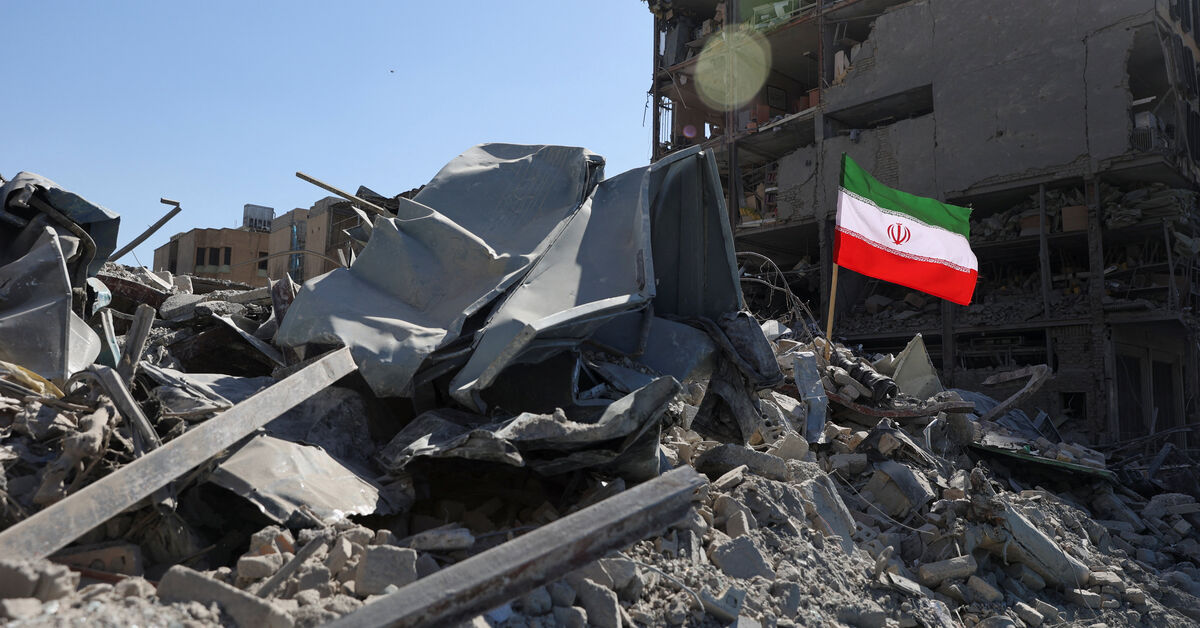
Iran's Nuclear Standoff: A Critical Flashpoint in the Nahost Situation
The nahost situation remains perpetually on edge, a complex tapestry of geopolitical rivalries, historical grievances, and interconnected conflicts. At the heart of this volatile regional landscape lies Iran's nuclear program, a persistent source of international concern that recently witnessed a dramatic escalation: US military strikes on Iranian atomic facilities, followed by Tehran's suspension of cooperation with the International Atomic Energy Agency (IAEA). These developments not only heighten fears of nuclear proliferation but also underscore the precarious nature of stability in a region already grappling with widespread conflict.
Escalating Tensions: The Broader Nahost Situation
Understanding the gravity of the nuclear standoff requires placing it within the broader context of the Middle East. The region, historically defined as encompassing countries of the former Ottoman Empire like Iraq, Israel, Jordan, Lebanon, Syria, and extending to include Egypt, Turkey, and Iran, is currently experiencing an unparalleled period of instability. Since October 2023, the nahost situation has been dominated by the conflict between Israel and Hamas, which began with the terrorist organization's attacks on southern Israel. This has led to devastating bombardments and ground operations in Gaza, causing widespread destruction and significant loss of life, only briefly interrupted by a fragile ceasefire in October.
Beyond this central conflict, peripheral yet dangerous skirmishes continue to simmer. Tensions between Israel and Hezbollah in Lebanon frequently flare up, regularly violating a November 2024 ceasefire. In Syria, sectarian clashes, such as those between the Druze minority and Sunni Bedouins in Suweida province from April to July 2025, have drawn in regional actors, with Israel reportedly striking Syrian government targets in Damascus to support the Druze population. Experts like Daniel Gerlach, a prominent Middle East analyst, have noted that despite the dangerous escalation, neither Israel nor Hezbollah appears to seek a full-scale war, yet the risk of a wider conflagration remains ever-present. This backdrop of simmering and overt conflicts creates an incredibly fragile environment, where any significant action, especially concerning nuclear programs, can ripple across the entire region with unpredictable consequences.
US Strikes on Iranian Nuclear Facilities: A Point of Contention
In June 2025, the nahost situation took a critical turn when the United States intervened militarily, launching attacks on several Iranian nuclear facilities. This action followed a period of intensified conflict between Israel and Iran, where Israel had initiated strikes, prompting retaliatory actions from Tehran. US President Donald Trump, shortly after announcing a ceasefire between Israel and Iran, asserted the success of these American strikes, vehemently denying reports that Iran had managed to move enriched uranium to safety prior to the attacks.
Speaking on his online platform, Truth Social, President Trump insisted that "nothing was removed from the facility," dismissing claims of pre-strike uranium relocation as logistically impossible and too dangerous. He further clarified that any vehicles seen near the sites were merely "concrete workers" attempting to cover shafts, not facilitating a nuclear transfer. Trump also launched a scathing attack on media outlets questioning the effectiveness of the US operations, accusing them of spreading "Fake News" and engaging in a "witch hunt," demanding apologies for "our great warriors." The controversy surrounding the actual impact of these strikes highlights a critical challenge in assessing the efficacy of military interventions and the veracity of information in highly sensitive geopolitical scenarios. While the US aimed to disrupt Iran's nuclear capabilities and send a clear message, the ambiguity around the strikes' full success only added another layer of uncertainty to the volatile